
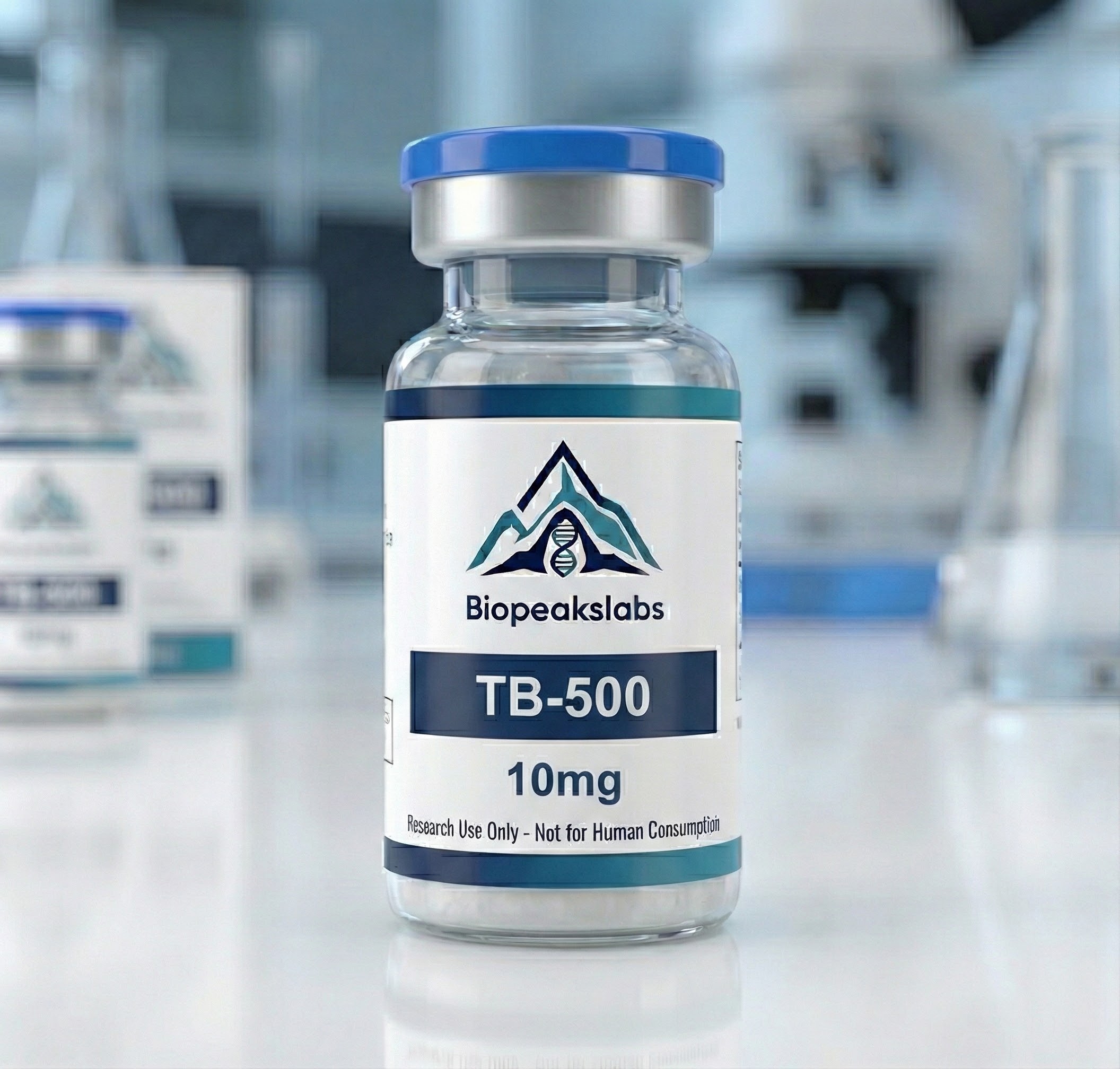
Description
Research & Mechanisms
1. Cellular Migration and Wound Healing The primary area of research for TB-500 involves its capacity to promote the migration of various cell types, including endothelial cells and keratinocytes, to the site of injury. Studies in animal models have shown that TB-500 administration can accelerate wound closure, suggesting a role in enhanced tissue repair dynamics.
2. Angiogenesis (New Blood Vessel Formation) Researchers investigate TB-500 for its potential to stimulate angiogenesis. By promoting the formation of new blood vessels, the peptide is studied for its ability to improve blood flow and nutrient delivery to damaged tissues, which may further support the healing process in experimental models.
3. Inflammation and Fibrosis In addition to regenerative properties, TB-500 is studied for its potential anti-inflammatory effects and its ability to reduce scarring (fibrosis). Preclinical data suggests it may downregulate pro-inflammatory cytokines and prevent the excessive deposition of collagen that leads to scar tissue formation.

Reviews
There are no reviews yet.